
Click Here to hear Podcast
https://www.buzzsprout.com/95458/2572738-overcoming-fears-doubts-in-sales
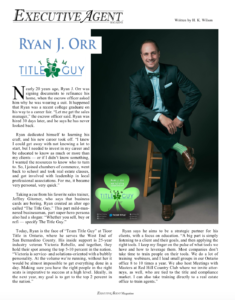
Ryan in this podcast addresses the inherent doubts and insecurities that all sales people have and how he finds a way to dig deep, and pull through and perform month after month, and year over year. He states it is not easy and thats why its important as to who we surround ourselves with.
Listen in and share your thoughts, ideas and mindshare.
Want to schedule a call or time with Ryan?
https://calendly.com/ryanjorr7/30min
Helping Others Succeed
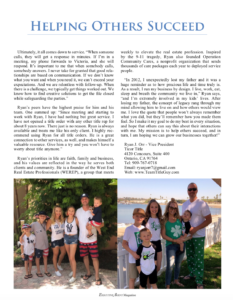
Ultimately, it all comes down to service. “When someone calls, they will get a response in minutes. It’s important to me that when somebody calls, somebody answers. I never take for granted that good relationships are based on communication. If we don’t know what you want and when you need it, we can’t exceed your expectations. And we are relentless with follow-up. When there is a challenge, we typically get things worked out. We know how to find creative solutions to get the file closed while safeguarding the parties.”
Ryan’s peers have the highest praise for him and his team. One summed up: “Since meeting and starting to work with Ryan, I have had nothing but great service. I have not opened a title order with any other title rep for about 8 years now. There just is no reason. Ryan is always available and treats me like his only client. I highly recommend using Ryan for all title orders. He is a great connection to other services, as well, and makes himself a valuable resource. Give him a try and you won’t have to worry about title anymore.”
Ryan’s priorities in life are faith, family and business, and his values are reflected in the way he serves both clients and community. He is a founder of the West End Real Estate Professionals (WEREP), a group that meets
weekly to elevate the real estate profession. Inspired by the 9-11 tragedy, Ryan also founded Operation Community Cares, a nonprofit organization that sends thousands of care packages each year to deployed service people.
“In 2012, I unexpectedly lost my father and it was a huge reminder as to how precious life and time truly is. As a result, I run my business by design. I live, work, eat, sleep and breath the community we live in,” Ryan says, “and I’m extremely involved in my kids’ lives. After losing my father, the concept of legacy rang through my mind allowing him to live on and how others would view me. I love the quote that people won’t always remember what you did, but they’ll remember how you made them feel. So I make it my goal to do my best in every situation, and hope that others can say this about their interactions with me. My mission is to help others succeed, and in turn, I am hoping we can grow our businesses together!”
Ryan J. Orr –
Vice President
Fidelity National Title
11175 Azusa Court, Suite 110 Rancho Cucamonga, CA 91730
Tel: 909-447-9266
Email: ryanjorr7@gmail.com
Web: www.TeamTitleGuy.com