
Summary
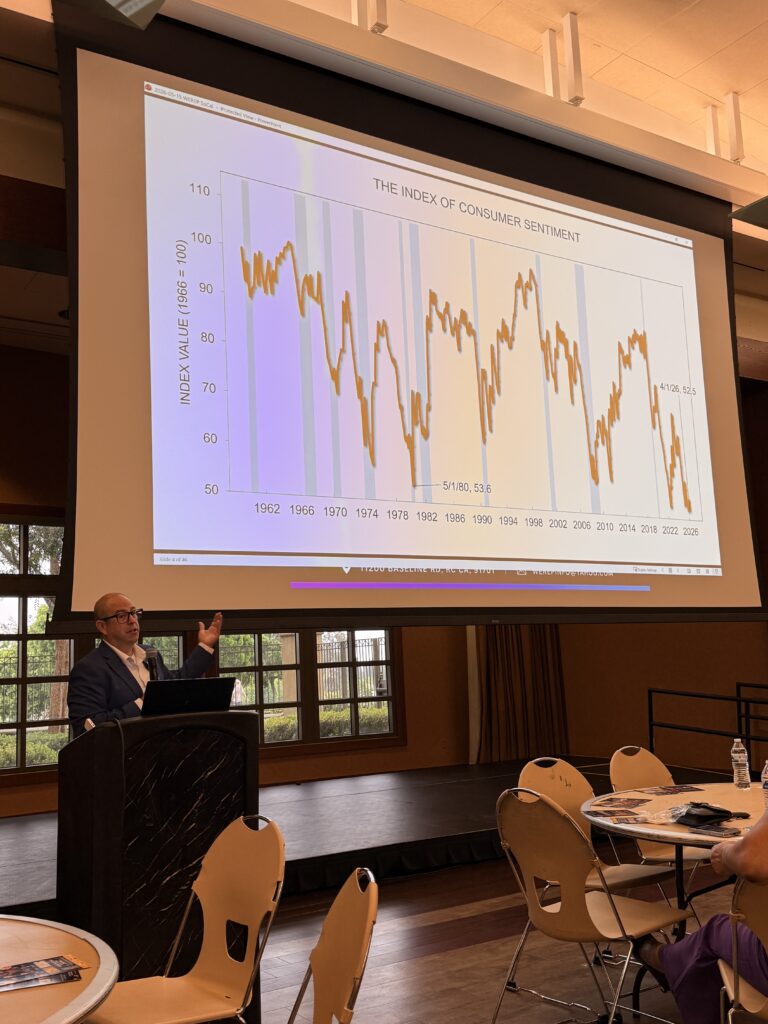
The current economic landscape presents a complex picture of high asset valuations, particularly in the stock market, juxtaposed with deeply negative consumer sentiment. Historical data suggests that the stock market’s current valuation, relative to earnings, is exceptionally high, indicating potential future volatility or corrections. Despite robust economic indicators like low unemployment and a strong stock market, public perception is overwhelmingly pessimistic, resembling or exceeding levels seen during the 2008 financial crisis. This disconnect is attributed to a “communications challenge” where people are misinformed or overly influenced by negative headlines, particularly regarding long-term investments like housing. There’s a significant opportunity to combat misinformation and educate potential homebuyers about the realities of the market, including down payment requirements and the long-term benefits of homeownership, thereby converting eligible individuals who are currently sitting on the sidelines.
Key Topics
- Stock Market Valuation:
- Historically, the stock market’s value (S&P) has been approximately 15 times earnings 78% of the time, fluctuating between 10 and 20 times.
- Current valuation is around 42 times earnings, indicating significant overvaluation compared to historical norms.
- This suggests potential for future volatility or a correction back towards the 20-ish range.
- Such a correction from 40 to 20 would entail a substantial market downturn.
- Economic Vulnerabilities:
- Overinflated asset prices, like the stock market, represent areas of risk in the economy.
- Psychological impacts of market fluctuations are significant, leading to rapid shifts in perceived wealth.
- Consumer Sentiment vs. Economic Reality:
- Consumer sentiment is lower now than during the 2008 financial crisis, despite a strong stock market and low unemployment (4.5%).
- This indicates a significant disconnect between objective economic indicators and public perception.
- “Communications Challenge”:
- The pessimistic public sentiment, despite economic strengths, is largely due to misinformation and media influence.
- People are “leaving money on the table” by not participating in the market due to fear and misperceptions.
- Housing Market Misconceptions:
- Housing should be viewed as a long-term investment, not a short-term trade.
- Concerns about “buying high” or “perfect rates” are overblown; refinancing is an option if rates drop.
- Many potential homebuyers are deterred by inaccurate information (e.g., “foreclosures are coming,” exaggerated down payment requirements).
- A survey found over half of California renters believe a 50% down payment is needed to buy a home, even in relatively affordable areas.
- Opportunity for Education:
- There is a substantial opportunity to educate and correct misinformation among eligible, employed individuals.
- Addressing these misapprehensions can convert potential homebuyers who are currently sidelined.
- Despite affordability challenges, many individuals with the financial means are not engaging due to fear and lack of accurate information.
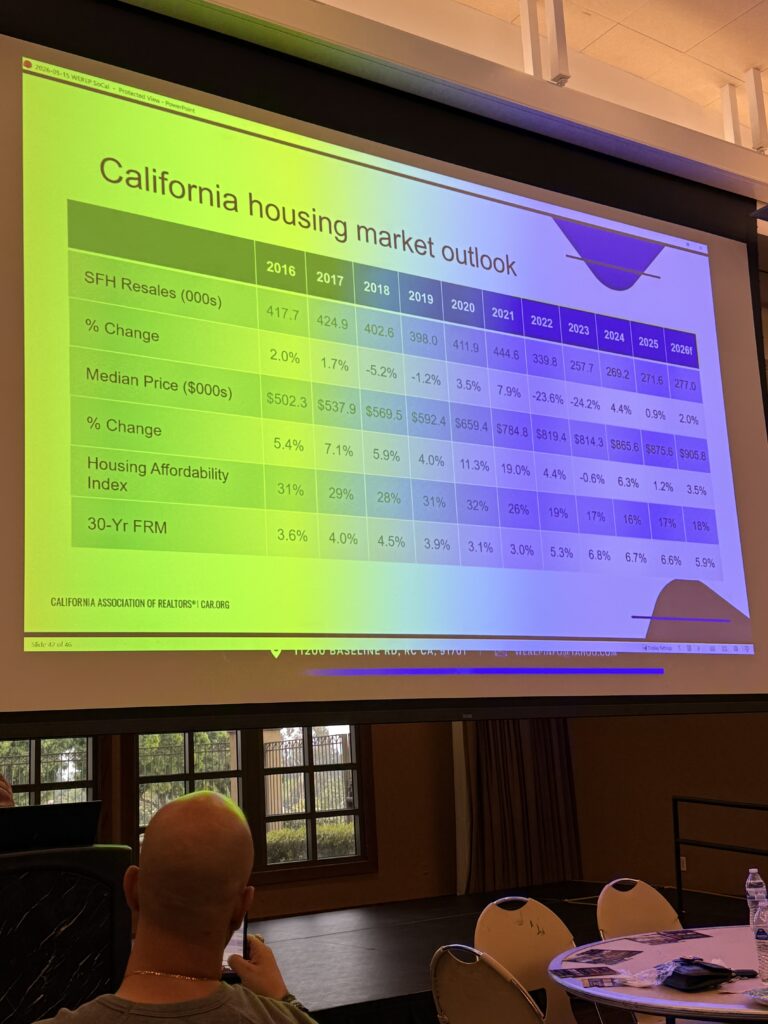
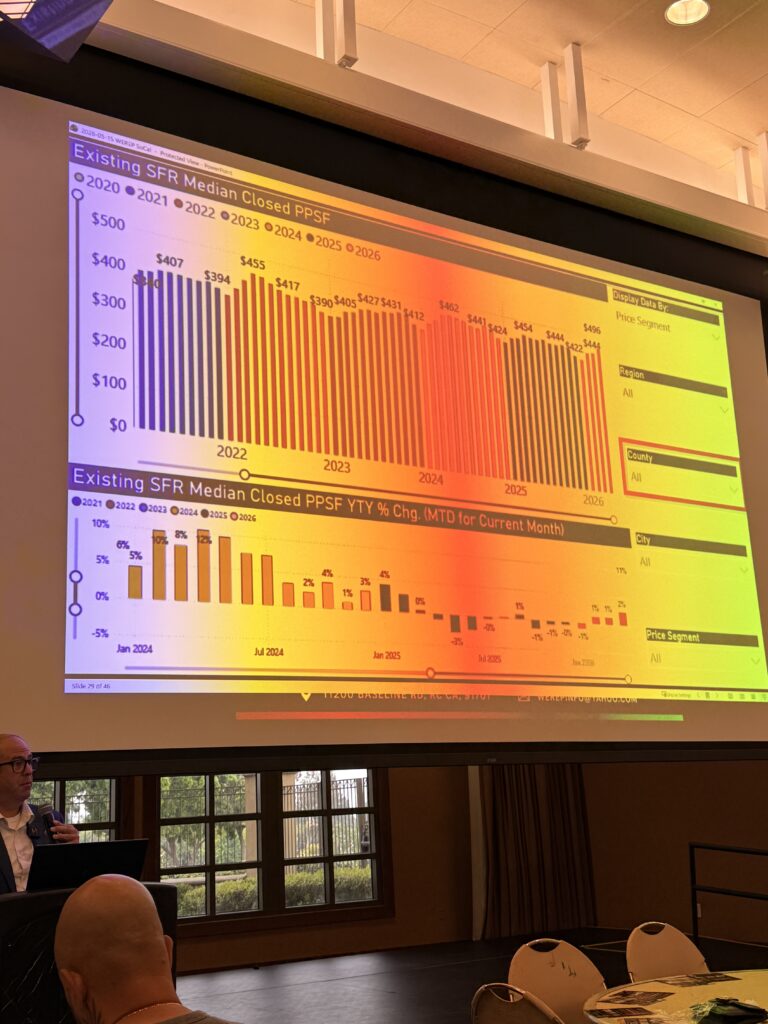
The California housing market, particularly in Los Angeles, Orange County, and the Inland Empire, is performing in line with statewide averages. The market is increasingly stratified by price, with higher price points showing greater resilience and growth. High-income earners, asset owners, and individuals in remote-friendly, high-paying jobs are driving this segment. The long-term forecast for California home prices is consistently upward due to strong demand, economic strength, and housing scarcity. Despite rising interest rates and economic uncertainty, prices have remained stable, highlighting the market’s fundamental strength. A key challenge is the increasing cost of homeowners’ insurance, which is projected to rise to align with profitability for carriers and national averages.
Comparison to Other States: Compared to states like Nebraska, where lower-value homes incur higher premiums, California’s current insurance costs for significantly higher-value homes are unsustainable for carriers.
Market Segmentation by Price: The California housing market’s performance is not uniform across regions but is heavily influenced by price point. Higher-priced segments are significantly outperforming lower ones.
High-Income Resilience: High-income earners, individuals with substantial assets (e.g., in the stock market), and those in secure, high-paying jobs (like AI engineering) are largely insulated from economic downturns and continue to drive housing demand in the upper tiers.
Shifting Market Thresholds: The price point at which the market remains active and thriving has steadily increased. Previously, it was homes from $750,000 and up; currently, the most robust activity is seen around the $2 million mark.
Proactive Investment Strategy: Real estate professionals should actively seek opportunities by identifying overvalued assets (e.g., stock market) and presenting real estate as a protective and profitable alternative to high-net-worth individuals.
Long-Term Price Appreciation in California: Despite short-term fluctuations, California home prices consistently increase over the long term. This trend is attributed to:
High Population: Too many people.
Strong Economy: Robust economic activity.
Housing Scarcity: Insufficient housing supply.
Market Resilience to Interest Rates: Even with a doubling of interest rates (from 2.85% to 8.25%) in late 2022, California home prices largely maintained their value, experiencing only a loss of momentum rather than a significant decline.
Home Prices and Economic Events: Home prices in California have shown resilience through significant events, including interest rate hikes, wars, uncertainty, and demand levels comparable to financial crisis eras.
Homeowners’ Insurance Challenges:
Rising Costs: Homeowners’ insurance premiums are expected to increase substantially in California.
Regulatory Environment: Current regulatory environments have artificially depressed insurance costs, making it unprofitable for carriers, leading many to leave the state.
Profitability for Carriers: For insurance carriers to return and operate in California, rates must rise to levels that ensure profitability, likely aligning with national averages.
Summary
The housing market presents both challenges and opportunities, particularly for high-income renters who are content with subscribing to housing despite the documented benefits of homeownership. Homeownership is highlighted as a primary driver of wealth accumulation and stability, enabling individuals to focus on personal and professional growth. The market is characterized by tight inventory, driven by macroeconomic forces and homeowners’ reluctance to sell due to favorable mortgage rates. Despite volatility, prices are increasing, and buyers should manage expectations as sellers are motivated but not desperate. Strategic communication and realistic expectations are crucial for both buyers and sellers in the current competitive market. The long-term outlook remains cautiously optimistic for a modest uptrend, assuming economic stability.
Emphasizes the importance of buying now at current prices, as future prices will likely be higher, outweighing potential refinancing benefits.
Homeownership vs. Renting:
Many high-income renters view housing as a subscription, overlooking the benefits of homeownership.
Homeownership is presented as a primary means of wealth accumulation and stability, distinguishing between those who “get ahead” (homeowners) and those who remain financially stagnant (renters).
Renters often spend discretionary income on luxury goods rather than investing, leading to limited financial progress.
The “blue or red” analogy simplifies the choice: blue for homeowners (financial progress) and red for renters (stagnation).
Housing Supply and Demand:
A need for diverse housing options exists, including apartments and luxury homes, to accommodate all segments of the population.
The housing market has been commoditized, driving up prices due to demand rather than inherent value.
Uncertainty impacts supply more than demand, leading homeowners with low mortgage rates (e.g., 3%) to “camp out” rather than sell.
Active listings are low due to reduced replenishment of inventory, not just increased sales. Buyers are purchasing fewer homes, but the number of new listings is consistently low.
The perception of increasing inventory leading to “deals” is often false; sellers are motivated but not desperate.
Mortgage Rates and Homeowner Behavior:
A significant percentage of homeowners (e.g., 62% in California) have sub-4% mortgage rates, making them reluctant to sell and incur higher rates on a new property.
This reluctance, combined with factors like Prop 13 property taxes and capital gains concerns, contributes to tight inventory and increased home prices.
People are living in their homes three times longer than previously, limiting transaction volume.
Buyer and Seller Strategies:
Buyers:
Must manage expectations; prices are not likely to decrease significantly.
Should understand that sellers are not desperate, even if motivated.
Avoid low-ball offers as the market is competitive; strong, realistic offers are needed.
Consider current conditions as a better time to buy than waiting, as prices are projected to continue rising.
Sellers:
It is a good time to sell due to tight inventory.
Need to price homes correctly and engage in pre-listing activities (e.g., professional photos, staging) to attract discerning buyers.
Should not expect immediate, desperate buyers, but recognize the market is competitive.
Need realistic expectations to avoid prolonged listings.
Market Outlook:
Cautious optimism for a modest, incremental uptrend in the market.
Projected 2% increase in transactions, though current pace is behind.
Economic fundamentals (jobs, economy) remain stable, but psychological factors influence market activity.
Housing prices are not expected to get cheaper, and dramatic improvements in interest rates are unlikely (6% is projected as the norm).