• Skip to primary navigation
  • Skip to main content
  • Skip to footer
  • Home
  • About Team Title Guy
  • Book Appointment
  • Subscribe to Email
  • Contact me
Team Title Guy

Team Title Guy

Sell... Buy... Refi... Specify Team Title Guy!

  • YouTube Videos
    • YouTube Channel
    • Educational Minute
    • Ryan’s Rants
    • TTG Events
    • Rancho Cucamonga
    • Training Classes
    • City Programs
    • Real Estate Closings
  • Event Calendar
  • Market Update
  • Blog
  • Reviews
    • Yelp Reviews
  • Title Resources
    • Forms and Documents
    • Informational Flyers
    • Transfer Tax and City Tax
    • Legal Documents
    • Fidelity Fee Schedule
    • Order CPL
    • Fidelity Agent
    • FNT Utilities
    • Comps
  • Podcast

Blog

City Of Rancho Cucamonga- State of City w John Gillison

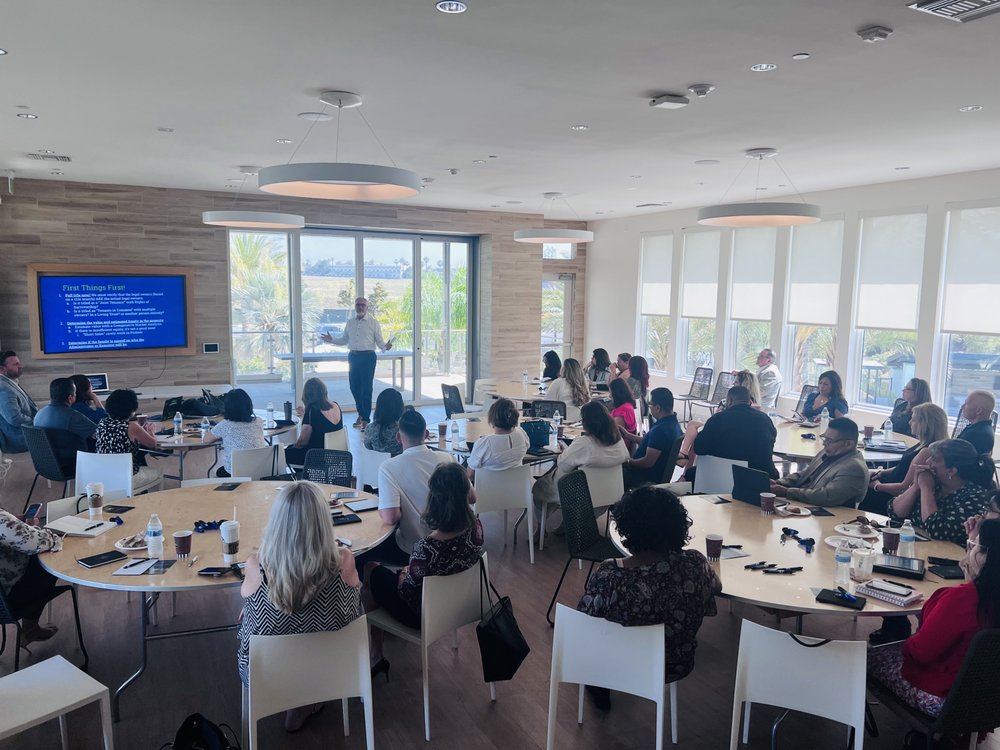
On March 22, 2019 John Gillison City Manager of RC spoke at the West End Real Estate Professionals, and it was an enlightening presentation about much of what is happening within the city. Attached below is a copy of his Presentation.

 

Rancho-CucamongaMajor projects in RC that have recently been completed, are in progress or have been submitted, focusing on Residential, Retail, Hotel, Industrial and City Infrastructure.

The presentation will include development trends and areas of interest as well as a forecast of the local economic conditions for the next 12-18 months.

In case you missed it, or attended and wanted a copy of the presentation. Click Link Below.

WEREP Presentation

1140x250

What is Title Insurance?

Both a lender’s and owner’s title insurance policy pay valid claims and legal fees necessary to defend against hidden title issues, but also decrease ownership risks by providing a thorough title search prior to the issuance of either policy.

An owner’s title insurance policy protects the rights of the homeowner for as long as they or their heirs have an interest in the property.

A lender’s title insurance policy protects the bank or other lending institution for as long as they maintain an interest in the property, which is typically until the loan is paid off. A lender’s policy is required by most lending institutions as a way to insure their security interest in the property.

Title insurance is designed to provide real property owners and lenders, and others with interests in real estate, the maximum protection from adverse title claims or risks. Title insurance affords protection both in satisfying valid claims against the title as insured and in defraying the expenses incurred in defending such claims.

What is title insurance? Title insurance is:

  • An assurance against loss and indemnifies the insured against actual loss should the title to the property insured not be as stated in the policy
  • An agreement to defend the insured’s title against an attack from parties claiming rights that have been insured by the policy coverage
  • An agreement to compensate the insured for actual losses suffered under covered title risks

What does title insurance not insure? It does NOT insure:

  • The market value of the property
  • Acreage, square footage or area of the property
  • The property address

Next month we will review some of the different types of owner’s and lender’s policies.

Will the Real Estate Market Crash in 2019?

The COO of a tool I like to use for market reports and data, interviewed. He answers questions on the Real Estate Marketplace today, and his thoughts based on the data as to where we are headed based on the numbers

How’s the market? Altos CEO Mike Simonsen recently sat down with HomeSmart International’s Wendy Forsythe to share what the data is telling us about the coming year (hint: look for more inventory and less insanity!)

Watch the 10-minute interview here:

Your thoughts?

(disclaimer, this is a talk that was posted by a real estate blog, and I am not endorsing for or against the company that posted this. I liked the content.)

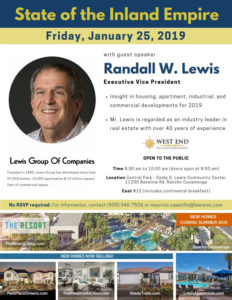
Randall Lewis 2019 State Of Inland Empire at WEREP.

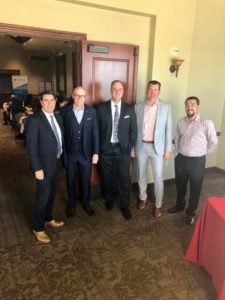
Randall Lewis came out to the West End Real Estate Professionals on January 25th and gave his insights on the market and where their efforts are as we head into the future. The Lewis Operating Corp has had its hands on some much in the Inland Empire, and have shaped it for years.

It was a great privilege to heave him out once again and to hear his thoughts.

Enclosed below is a recording I took of the talk. Listen in and please comment with you thoughts and feedback! At this meeting our room was packed out to max capacity with 320+ people in attendance.

Also, WEREP.org is an independent group of Real Estate Professionals that meets weekly for the betterment of all. Join us sometime. More info on the website referenced above!


Ticor Agent ONE- gets better

We made some major enhancements to TicorAgent recently and have created a video for your agents that covers all of the key items in under 2 minutes!

Numbers made easy.
Experience real estate’s #1 closing cost app, TicorAgent ONE.

A great app gets even better.

Buyer estimates.
Calculate the two numbers your buyers care about most: total monthly payment(PITI) and closing costs.

Would you like to Role Play? Have a one on one, or small group walk through on the tool?

Seller net sheets.
Regardless of price, neighborhood, or motivation, every seller wants to know the same thing: what will I net? Run a net sheet from anywhere in seconds.

Book Appointment today.

Also, we host classes weekly at Ticor Ontario on Wednesdays at 3 pm. Join Us


What even ARE Deferred Sales Trust and 1031 Exchange?

In this session of Meeting with the Masters we have Greg Burns of IPX1031, as well as Joel Harworth and Philip A. Board from 1 on 1 Financial here to discuss the ins and outs of 1031 Exchanges and Deferred Sales Trusts and how to use them to your advantage. If you prefer to listen to the recording of the episode, you can hear it HERE.  As always, you can listen to our podcasts on Itunes, Stitcher, or Spotify.

The Masters Team: Greg Burns, Philip A. Board, Ryan J. Orr, Joel Harworth, and Ron Romero

This discussion is going to be based upon the answers to the question what should you do with appreciated assets you want to cash in on?  The answers to this question are as follows:  Sell and pay the astronomical taxes on them, do a 1031 Exchange, do a Deferred Sales Trust, or just hold onto your assets.  We’ll be discussing everything about the middle two options because the others are self explanatory.

Click here to jump to Deferred Sales Trusts

Click here to jump to FAQ

Why Do a 1031 Exchange & What are the Limitations?:

  • 1031 tax code says that if you sell a property for investment or business use to exchange for another real estate property whose initial intent of purchase must be investment or business use, you can defer the tax.
  • Why is deferring the tax such a big deal?  The tax on a real estate sale is HUGE, at 24.3% as the bare minimum in the state of California.
  • So you want to 1031 exchange for a duplex you rent out in order to buy an “investment property” in Hawaii a few years before you’re ready to retire.  Now you can defer all tax to the sale as long as you have a minimum of 2 weeks of income per year.  If client makes any repairs, it does not count against the two weeks, so people tend to “do repairs” and stay there for a while.
  • Now, say you plan on using this investment property as your retirement property a few years down the line.  The purpose of the exchange is strictly for investment or business use, but after a minimum of about 2 years of use as an investment you have the ability to use it as you please without risking the IRS coming after you about it.
  • 1031 is not a condition of sale, you can notify the buyer, but don’t need to advertise it as the buyer does not have to have anything to do with the exchange.  However, when writing up the contract for the sale you must put in language stating that the seller is doing an exchange and you furthermore must hire a company that does 1031 exchange in house like IPX, they have 45 days after the escrow closes to identify a property to exchange (loophole for that is listed in the process of an exchange section).

Now that we have that out of the way, we can discuss the…

Process of a 1031 Exchange:

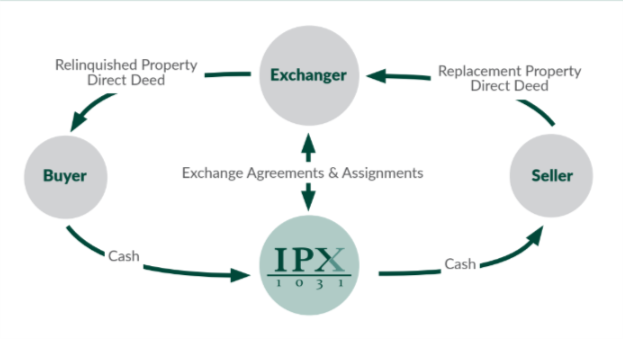
  • Prior to closing the sale of the Relinquished Property the Exchanger and a Qualified Intermediary must enter into an Exchange Agreement which requires the Qualified Intermediary to
    • acquire the Relinquished Property from the Exchanger and transfer it to the buyer (by direct deed from Exchanger to buyer)
    • acquire the Replacement Property from the seller and transfer it to the Exchanger (by direct deed from seller to Exchanger).
  • Also prior to closing the sale of the Relinquished Property, the Exchanger must assign rights under the Relinquished Property sale contract to the Qualified Intermediary and provide notice of assignment to the buyer.
  • At closing, net proceeds from the Relinquished Property sale (exchange funds) are paid directly to the Intermediary to be held in a separate account for the Exchanger until used to purchase Replacement Property.

From here, the Exchanger now has the responsibility to find a suitable exchange property.  They are given 45 days after escrow closes to identify property, with the possibility of a 21 day post-escrow window and a further possibility to appeal for a 15 day extension; this sums up to a total possible 81 days to identify property which should allow for plenty of time for the Exchanger to decide.


There are 3 main rules to identifying one or more properties to acquire in the exchange which are as follows:

  • The 3 property rule- the maximum number of properties that can be acquired under normal circumstances is 3.
  • The 200% rule- the aggregate value of the properties can not exceed 200% of the selling value of the property that had initially been exchanged (again also under normal circumstances). 
  • The final rule is called the 95% rule and really only exists as an exception to the first two rules and is extremely uncommon.  What it does is allows for more than 3 properties worth up to and exceeding 200% of the original’s selling value to be purchased in the exchange provided that the Exchanger acquires 95% of the total sum value of the identified properties within the exchange period.  This effectively never happens in practice and the rule can almost essentially be ignored.
  • Once the property has been identified, there is a 135 day period during which the property is to be purchased and the Exchange comes to a close.


Now that we know what a 1031 Exchange is, it’s time to cover our second big answer to our question…

What is a DST, and why do I want one?

  • Simply put, a deferred sales trust is a financial vehicle that allows investors to transfer highly appreciated assets to a trust for the purpose of deferring payment of capital gains taxes and generating an income stream. These trusts are an alternative to 1031 exchanges and direct sales and can protect your assets from being too highly taxed.
  • A DST is a contractual arrangement between an individual and a trust in which the individual sells property to the trust in exchange for the trust’s agreement to pay the individual a certain amount over an agreed period of time.
  • Deferred Sales Trusts are completely legal as they have been reviewed by the IRS, FINRA, as well as National Tax Law Firms
  • 1031 timelines and restrictions make it difficult to find a quality deal, especially combined with the lack of inventory to choose from.
  • Interest rates in the US are hovering near 40 year lows.
  • Investors can allocate more funds to their portfolio than what would result from a direct sale.
  • DSTs can be used to invest back into real estate or a business, .  As long as the money stays in the trust and does not go directly back to you without first going through the trust, you can do virtually anything with it.

Process of a Deferred Sales Trust:

  • Go to MyDSTPlan.com and get in contact with the Estate Planning Team.  The EPT is a group of legal and financial service professionals dedicated to helping preserve wealth and protect estate.  Deferred Sales Trusts are exclusively offered by the EPT along with a handful of specialized tax attorneys with unique experience. 
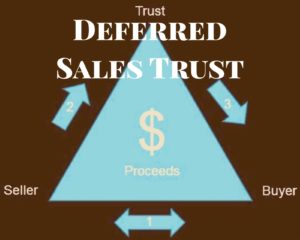
  • Assets to sell are sold to a third party trustee in consideration of a secured DST installment contract
  • The third party DST trustee buys the assets, who sells them to a cash buyer
  • The cash buyer pays to the trust in exchange for the assets
  • The secured DST installment payments are made to the seller from the trust
  • DST payout timeline: the trust is written in 10 year increments traditionally up to 30 years, but can be extended out 10 years at a time indefinitely; meaning that the payout can be extended to 40, 50, or more years as long as you are willing to adjust the payout to fit the newly adjusted timeline.

FAQ:

  • Is there a fee for the DST?  Generally speaking it will be 1.5% to write the trust, and a trust deed fee, 25 to 50 point basis fee, 1% advisory fee, and small management fees.
  • Can two parties join in a 1031 together to buy a new property together?  Yes, both parties can be involved in a 1031 and do it so long as they keep the same taxpayer and make tenants in common.
  • What happens if you are involved in a reverse exchange?  The buyer cannot have both properties in your name at the same time so the 1031 exchange company creates an LLC to buy the property, buyer loans money to buy the house, do a NNN lease agreement, then do a proper 1031 exchange if the property closes.
  • What is a NNN lease agreement?  It is an agreement that the lessee is to take care of all repairs and renovations to the property being leased.  Many major companies go into NNN leases when they have chain stores such as Home Depot or McDonalds.


Click here to go back to the top

Click here to go to 1031 Exchange

Click here to jump to Deferred Sales Trusts

  • « Go to Previous Page
  • Page 1
  • Interim pages omitted …
  • Page 12
  • Page 13
  • Page 14
  • Page 15
  • Page 16
  • Interim pages omitted …
  • Page 59
  • Go to Next Page »

Footer

Follow Us

Yelp Reviews

Fidelity National Title
4.6
Based on 21 Reviews
Yelp logo
Cody M.
Cody M.
2025-05-04 08:35:26
Ryan and the team at National Title are professional, efficient, and a pleasure to work with. Highly recommend this 5 star business! read more
Jimmie H.
Jimmie H.
2022-12-03 18:14:01
Ryan Orr is no longer at Stewart Title. The Stewart Office in Ontario is close. If you need Stewart Title please call Jimmie Herrick 9095449407. I have been... read more
Shereece M.
Shereece M.
2022-04-21 16:09:47
Ryan Orr is an amazing Title Representative!! I've been utilizing his services for well over 10 years! Not only is he professional, he's a person of... read more
Erick B.
Erick B.
2022-01-20 17:20:32
Ryan O. gets the job done! Take my word for it and contact him for all of your title needs! read more
Jerrico C.
Jerrico C.
2020-12-23 18:23:52
Common theme with this company seems to be that they help customers knowing fully well that they may not be part of a transaction. Ryan answered some... read more
Scott C.
Scott C.
2019-07-27 07:28:04
Thank you Ryan for going out of your way to help out on a challenging escrow this past Saturday. I was on Catalina for our week long Boy Scout camp and had... read more
Cecilia L.
Cecilia L.
2019-07-20 12:51:19
The worst escrow company to deal with in the USA. Worst customer service. The escrow and Title charges and fees are up to the heaven and as tall as the flag... read more

Copyright © 2026 · Ryan J. Orr · Fidelity National Title
Privacy | California Privacy | Terms of Use | Accessibility